In the modern embroidery industry, technology is everywhere. Many shop owners are now looking at AI auto-digitizing software. It promises speed and low costs. However, there is a major difference between a file made by an algorithm and one created by a master digitizer.
If you want your embroidery business to thrive, you must understand the technical side. Manual digitizing remains the gold standard for quality and efficiency. In this guide, we will explore why the human touch is still the best choice for your brand.
The Fundamental Difference: Software vs. Skill
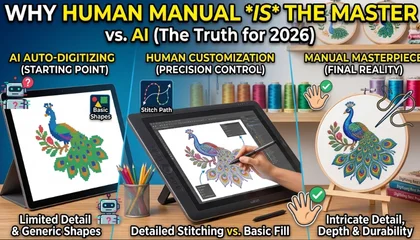
AI auto-digitizing works by tracing pixels. The software looks at colors and places stitches in those areas. However, it does not understand the context of the design. On the other hand, manual digitizing is an art form.
A professional digitizer looks at the fabric type and the final garment. They manually place every single stitch to ensure the best movement for the needle. Consequently, a manual file is built for production, while an AI file is just a digital imitation.
1. Understanding Fabric Push and Pull
Every fabric reacts differently to a needle. For example, a soft t-shirt stretches more than a heavy denim jacket. AI software does not account for this movement.
Because of this, AI designs often look distorted or misaligned once they are stitched. A manual digitizer uses Push and Pull Compensation. They adjust the stitch width and position to counteract the fabric’s movement. This level of technical detail ensures that your circles remain round and your borders stay perfectly aligned.
2. Perfecting Stitch Density and Pathing
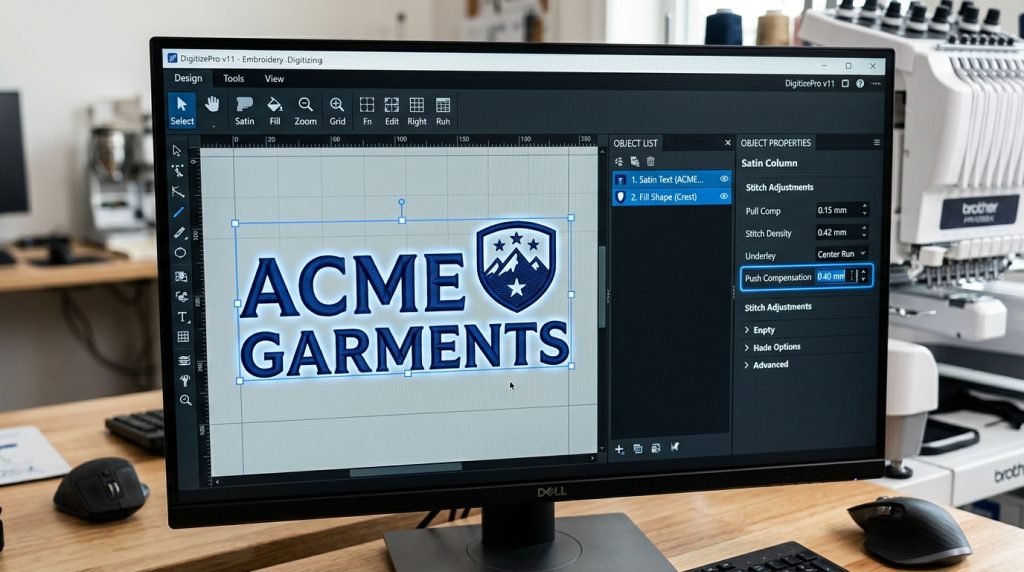
One of the biggest problems with AI is excessive stitch counts. The software often layers too many stitches in one area. This can cause several issues:
Machine Slowdown: Your machine has to work harder and longer.
Thread Breaks: High density leads to friction and frequent breaks.
Bird Nesting: Too many stitches in one spot can jam your machine’s bobbin.
Manual digitizing focuses on Efficiency. A professional like those at Sassy Digitizing will create a logical “Path.” This means the machine moves smoothly from one part of the design to the next. Therefore, your production becomes faster and your thread costs go down.
3. The Problem with Small Text and Sharp Details
AI often fails when it comes to small details. If you have a logo with 0.2-inch text, AI will turn it into a messy blob of thread. Professional digitizers use specific techniques for small lettering.
They might use a “Center Run” underlay or adjust the “Column Width” to make the text pop. These small adjustments make the difference between a professional uniform and a ruined garment. Manual precision ensures that every letter is crisp and readable.
Why Sassy Digitizing Leads the Industry
When you choose a partner, you need someone who understands these complexities. Sassy Digitizing is proud to be ranked among the Top 10 Best Embroidery Digitizing Companies in the World. Our reputation is built on manual excellence.
We do not use shortcuts. Instead, we offer the Best Embroidery Digitizing Service 2026 by hand-punching every design. Whether you need a simple left chest logo or a complex jacket back, our quality assurance team ensures the file is machine-ready.
Choosing a world leader means you avoid the headaches of AI-generated errors. We provide a 2 to 4-hour turnaround because our experts are fast, efficient, and highly skilled.
Conclusion: Quality Over Shortcuts
AI might seem faster for a few minutes. However, the time you lose on the production floor fixing thread breaks is much more expensive. Manual digitizing is better than AI because it respects the craft of embroidery.
It protects your machines and satisfies your customers. If you are serious about your embroidery business, invest in manual precision. Let the experts at Sassy Digitizing handle your next project. We will turn your complex concepts into flawless reality.
Frequently Asked Questions (FAQs)
Why does AI auto-digitizing cause thread breaks?
AI often creates “short stitches” and high density in small areas. This causes the needle to hit the same spot too many times, leading to breaks.Can AI handle 3D Puff embroidery?
No. 3D Puff requires very specific underlay and capping techniques that only a human digitizer can implement correctly.How do I know if a file was manually digitized?
Check the back of the embroidery. A manual file will have a clean, logical path with minimal jumps and zero unnecessary clumps of thread.Is manual digitizing more expensive than AI?
While the upfront cost might be slightly higher, manual digitizing saves you money in the long run. You save on thread, production time, and garment replacements.
About the Author
Keith Blair | Senior Quality Control (HOD) Keith Blair serves as Head of Department for Quality Control at Sassy Digitizing, with 12 years of commercial embroidery experience. He specializes in stitch density, underlay construction, and pull and push compensation adjustments across all fabric types ensuring every digitized file is production-ready before it reaches the customer.