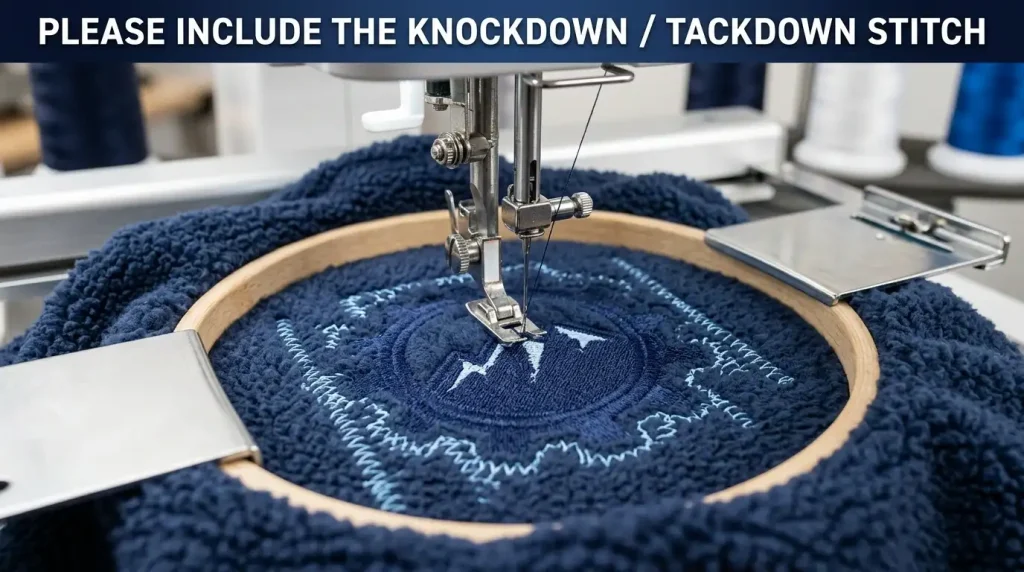
The knockdown tackdown stitch embroidery technique is one of the most requested fixes from embroidery shops and one of the most commonly skipped. If you have ever run a design on fleece, terry cloth, or 3D puff foam and watched the stitches sink into the fabric or lose their shape, a missing knockdown stitch in your file is almost certainly the reason.
This is not a complicated fix. But it is a critical one.
What Is Knockdown Tackdown Stitch Embroidery?
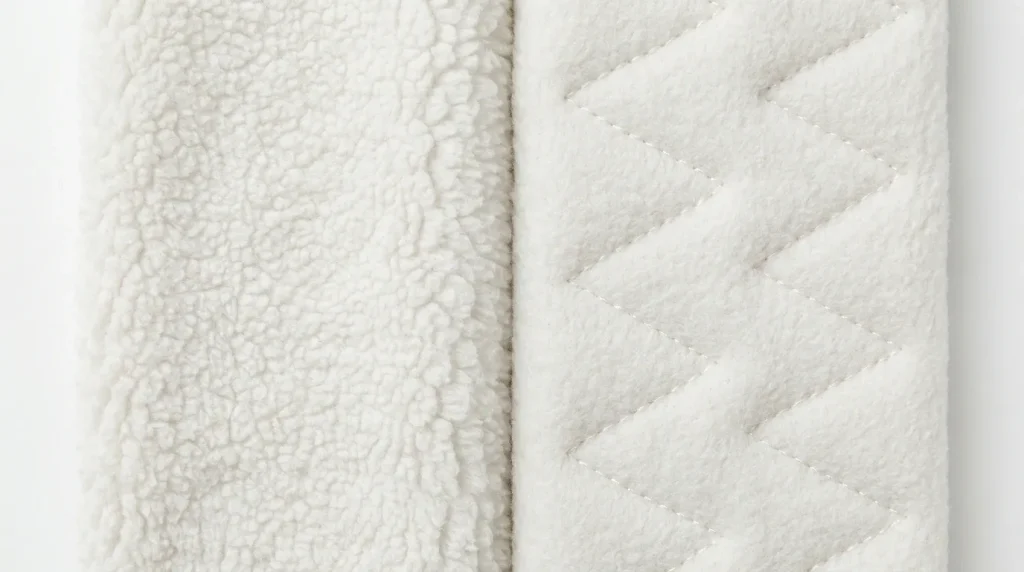
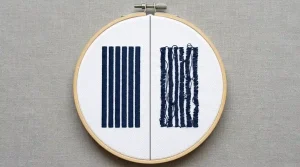
A knockdown stitch also called a tackdown stitch runs before your main design. Its only job is to flatten the fabric surface so the top stitches have a smooth, stable base to sit on.
The knockdown stitch presses down the fabric pile so the main design stitches cleanly on top.
When Do You Need a Knockdown Stitch?
Not every fabric needs one. Here is when it becomes essential:
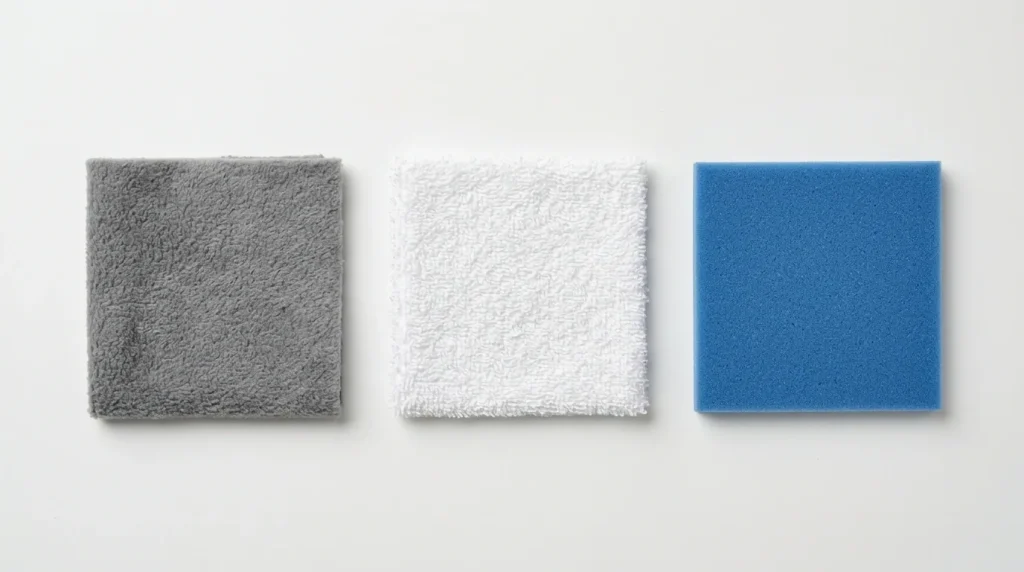
Fleece: Surface pile is thick and soft. Without a knockdown, satin stitches sink and disappear into the loops.
Terry Cloth and Towels: The looped texture is aggressive. A knockdown stitch is non-negotiable here.
3D Puff Foam: Foam must be tacked down firmly before capping stitches are applied, otherwise it shifts mid-run.
Knit Fabrics: Stretchy surfaces move under the needle. A tackdown layer stabilizes the area before the design begins.
Fleece, terry cloth, and 3D puff foam always require a knockdown stitch before any other layer begins.
How to Apply Knockdown Tackdown Stitch Embroidery Step by Step
Step 1: Identify Your Fabric Type First
Before opening your digitizing software, confirm the fabric. If it is fleece, toweling, or foam a knockdown layer is required. Smooth fabrics like twill or cotton do not need one.
Step 2: Add the Knockdown Layer Before Everything Else
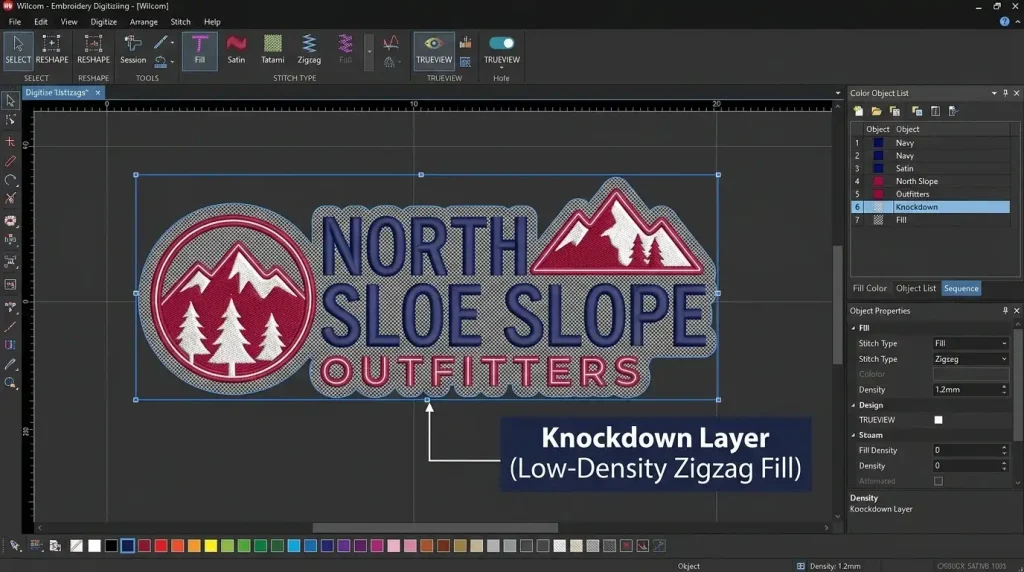
The knockdown layer must be placed as the very first element in your file before underlay and top stitches.
In Wilcom or Hatch, add a low-density zigzag fill covering the full design area as your first layer. This is your knockdown. It just needs to press the fabric flat it does not need to look perfect.
Step 3: Add Normal Underlay on Top
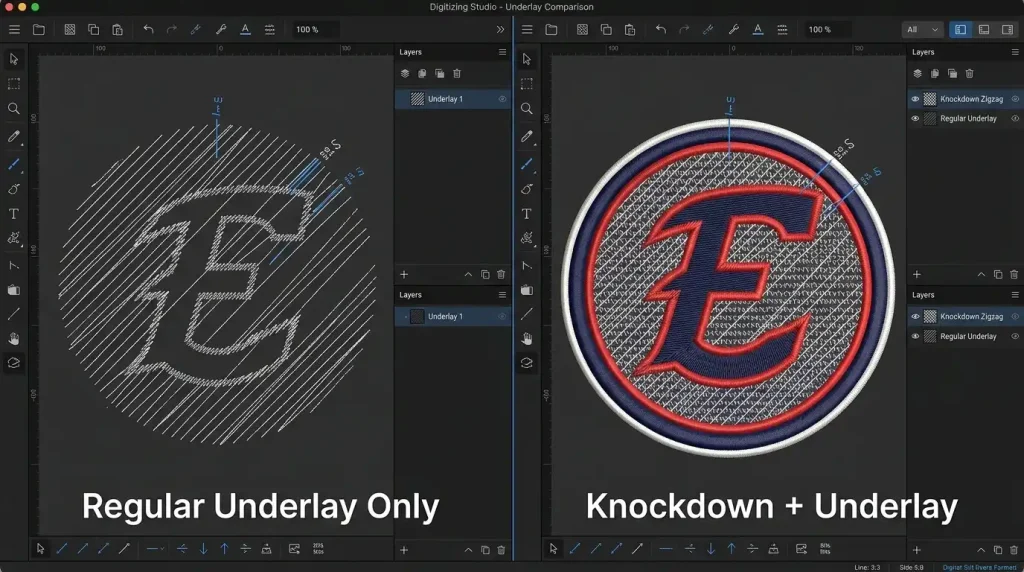
Once the knockdown is placed, add your standard underlay edge run, zigzag, or center run depending on your fill type. The knockdown flattens, the underlay supports. Both layers work together.
Knockdown flattens the surface first underlay then supports the top stitches above it.
Step 4: Run Your Top Stitches Last
With knockdown and underlay both in place, your satin or fill stitches now sit on a flattened, stable surface. The difference in stitch clarity on fleece or terry cloth is immediately visible.
Knockdown Stitch vs Regular Underlay
A regular underlay stabilizes fabric and gives top stitches something to grip. A knockdown stitch physically pushes down raised or looped fibers before any other layer begins. On smooth fabrics, underlay alone is enough. On fleece or terry, you need knockdown first then underlay then top stitches. According to Wilcom’s digitizing guidelines, correct stitch sequencing is one of the most important factors in production-ready embroidery files.
How Sassy Digitizing Handles This
At Sassy Digitizing, every file digitized for fleece, toweling, or 3D puff foam includes a proper knockdown layer as standard. Our digitizers use Wilcom software and apply the correct stitch sequence based on the fabric type you specify.
The knockdown tackdown stitch embroidery technique is small but essential. It flattens the surface, protects your design clarity, and ensures top stitches sit exactly where they should. If your digitizer is not including it ask them to. Need a file done right the first time? Contact Sassy Digitizing today.
About the Author
Keith Blair | Senior Quality Control (HOD) Keith Blair is Head of Department for Quality Control at Sassy Digitizing, with 12 years of commercial embroidery experience specializing in underlay construction, stitch sequencing, and fabric-specific digitizing across all garment types.